
Building Enduring Leadership: Lessons from Rome
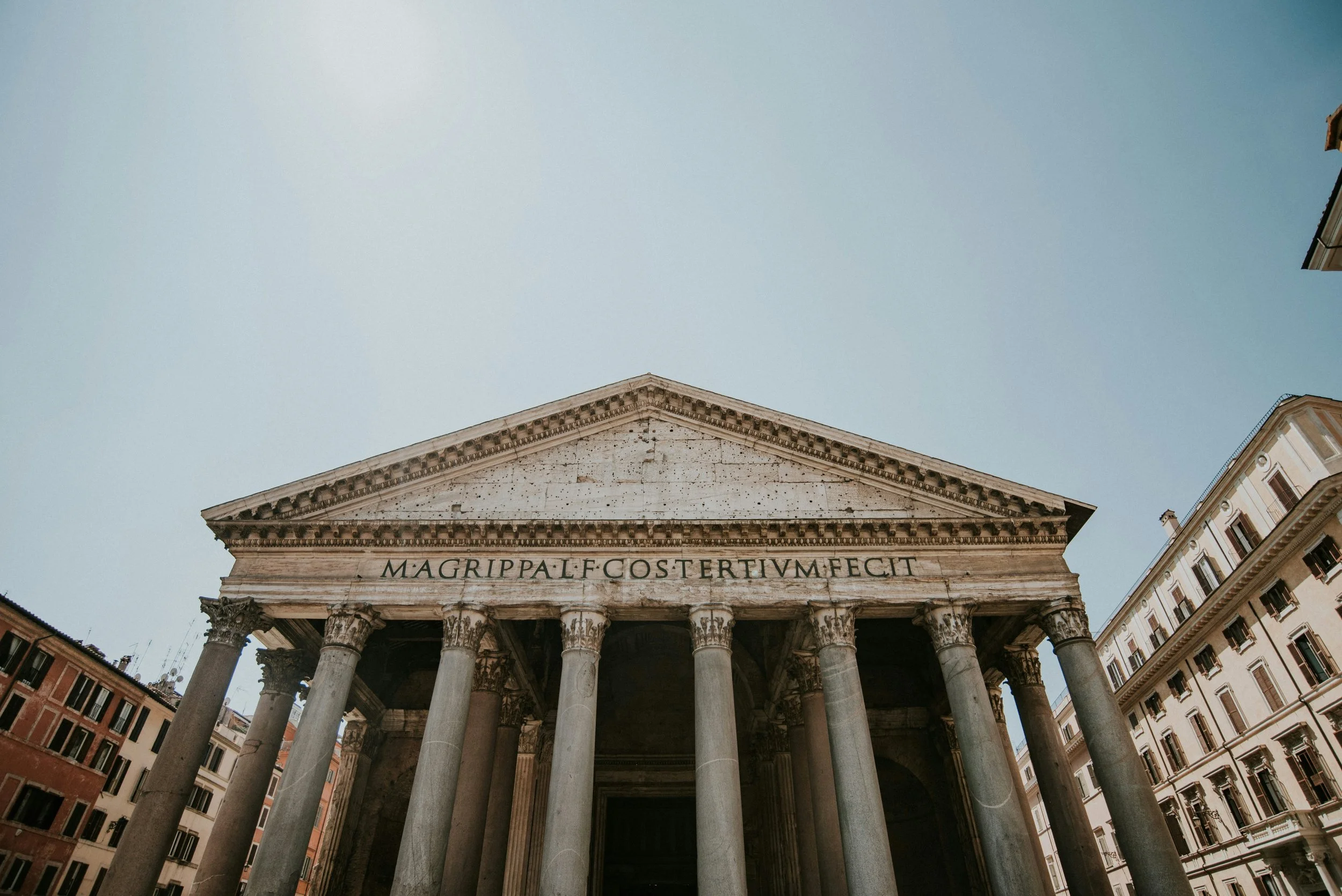
Rome, Italy
Walking through a beautiful and impressive Rome on a recent trip with my family, I was pondering a handful of questions:
What makes institutions last?
What creates everlasting culture?
What kind of leadership compounds over decades?
Modern leadership rewards speed, responsiveness, and short-term optimization.
But walking through the history of Rome raises a different type of question. What allows institutions, cultures, and leadership principles to endure for centuries?
Rome forces us to look past the current news cycle. Its architecture, infrastructure, governance, and cultural influence were not built for immediate validation. Instead, they were constructed with the long term in mind. Roads connected the empire. Aqueducts served generations. Buildings were constructed not simply for utility, but to communicate values, identity, and ambition across time. I was curious about why buildings in Rome are so beautiful. My research led me to the notion that architects in Rome wanted buildings to uplift people emotionally and spiritually.
Modern organizations rarely think this way. Operational urgency often consumes the leadership agenda. Important work gets done, but often without reflection on whether the organization is building something durable beneath the daily activity.
Enduring leadership requires a longer time horizon. Leaders like Warren Buffett, Jeff Bezos, Masayoshi Son, and Yvon Chouinard embody intergenerational thining. They ask their leaders to think not only about growth, but about resilience. In my own framework, this begins with Vision, the ability to see the big picture, set strategic goals, and inspire alignment.
Without a clear vision, you are merely reacting to the quarter. With it, you are building an institution. Leaders who embrace the long view understand that their primary job is not just to execute in the present, but to cultivate a foundation that survives the inevitable pressure of the future.
Rome also highlights a critical truth: systems matter more than personalities. In many modern firms, leaders become central to everything. Decisions bottleneck, information stays at the top, and teams become dependent rather than empowered. Such organizations may be challenged in scaling sustainably.
The Roman Empire, despite its complexities, demonstrated the power of institutional continuity. Durable organizations cannot rely solely on charisma or individual brilliance. They require structures, such as governance, communication standards, and repeatable processes that allow good judgment to persist even when the heroic leader is not in the room.
Under the current conditions of AI disruption, geopolitical instability, and burnout, it is tempting to prioritize reaction over reflection. But enduring leadership requires a delicate balance.
This is where Adaptability becomes a defining pillar. It is the capacity to embrace change and navigate complexity with a growth mindset. Rome thrived because it could assimilate new ideas, technologies, and territories without losing its core identity. Today’s most effective executives do the same.
Perhaps the most striking thing about Rome is the sense of continuity, with the feeling that generations contributed to something larger than themselves.
They understand that leadership is about shaping the teams, cultures, and standards that continue creating value long after they are gone.
In that sense, enduring leadership is less about personal legacy and more about stewardship.
Next Steps: Are you keen on creating a career that endures cycles? Let’s have an initial 1:1 conversation to elevate you or your team’s leadership impact.